





Map work zones, then match access to build timing. External access may obstruct outfitting or fail hatch clearances. This guide helps teams compare systems before installation.
What Makes Shipyard Scaffolding Different from Land-Based Projects?
How do hull geometry and vessel dimensions change access planning?
Take the vessel drawing zone by zone. Map hull curves and deck transitions against tanks, frames, pipes, and installed equipment. Record clearance at each elevation. Measure the space a component must pass through to its working position; a whole-ship estimate cannot establish the available clearance.
How do build stages and concurrent trades affect scaffold layout?
A welding platform may block the route used by the next crew. Assign each activity a trade and window. An installation crew’s lifting route may be blocked by the previous crew’s welding platform. Where this occurs, schedule alteration or removal before the installation crew starts.
Which space, movement, and environmental constraints must be mapped first?
Check hatch dimensions and overhead obstructions between the entry opening and component erection position. Allow for ventilation and routes for people and equipment. Record these for enclosed tanks and exposed hull faces. The survey should identify erection positions and when work requires relocation.
Which Shipyard Scaffolding Systems Suit Different Construction Tasks?
When does modular scaffolding suit changing vessel shapes and work fronts?
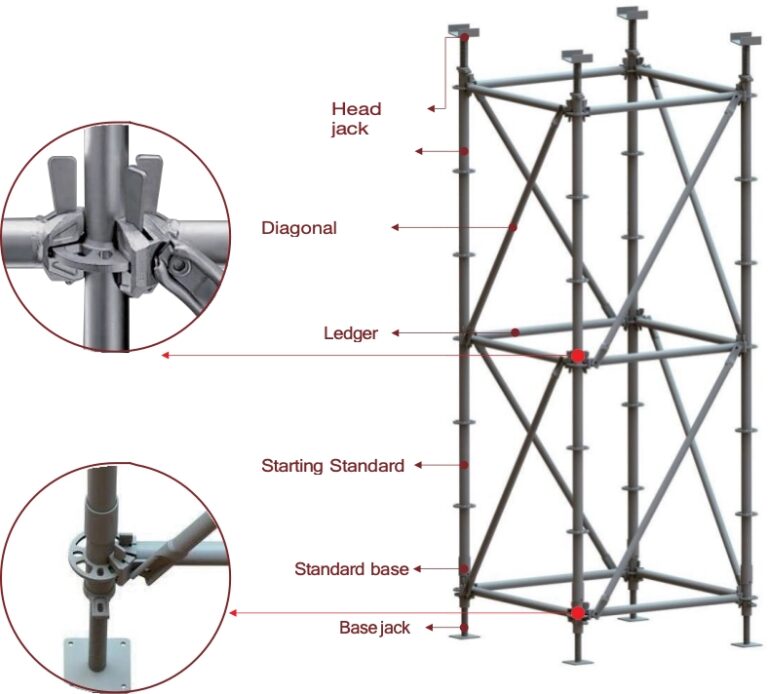
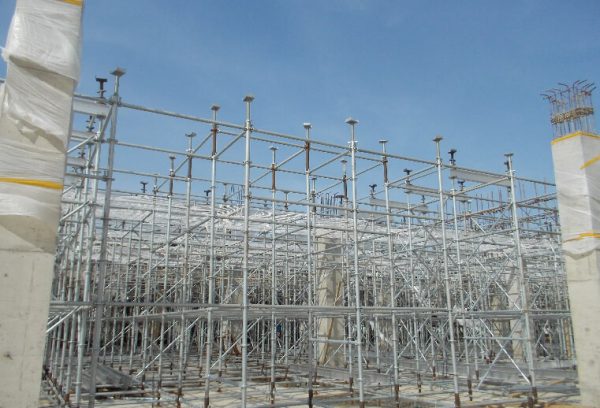
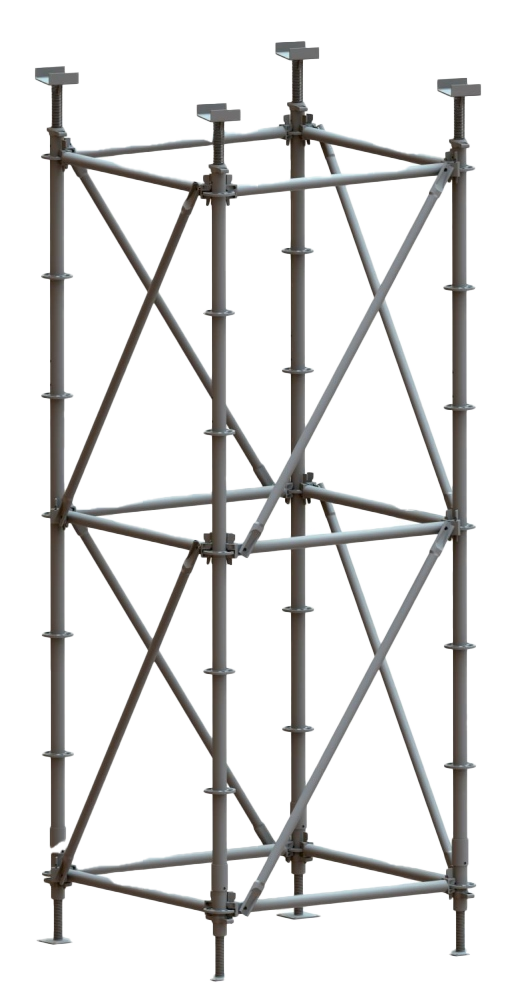
Modular systems use connected components arranged in different configurations, useful where work faces change. A ringlock arrangement joins standards, ledgers, and diagonal braces through wedge-pin connections. These parts transmit load and horizontal force. Base jacks, base collars, and head jacks complete the principal component list. Project engineering and manufacturer guidance govern layout, capacity, and compatibility. At GOWE, we work across formwork and scaffolding systems. Check ringlock scaffolding systems connections against the proposed vessel arrangement.

When is tube-and-coupler scaffolding useful for local adjustments?
Use the drawing to pinpoint where each coupler needs to move. Plan time for setup, checks, changes and removal. Assess these tasks against working space gained where repeated adjustments are anticipated.
When should teams consider suspended or mobile access systems?
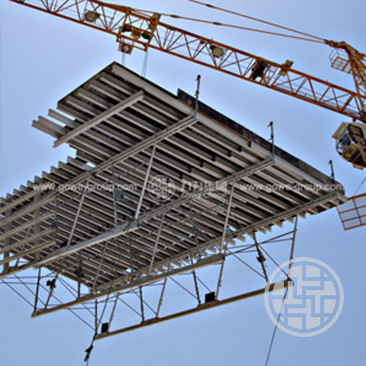
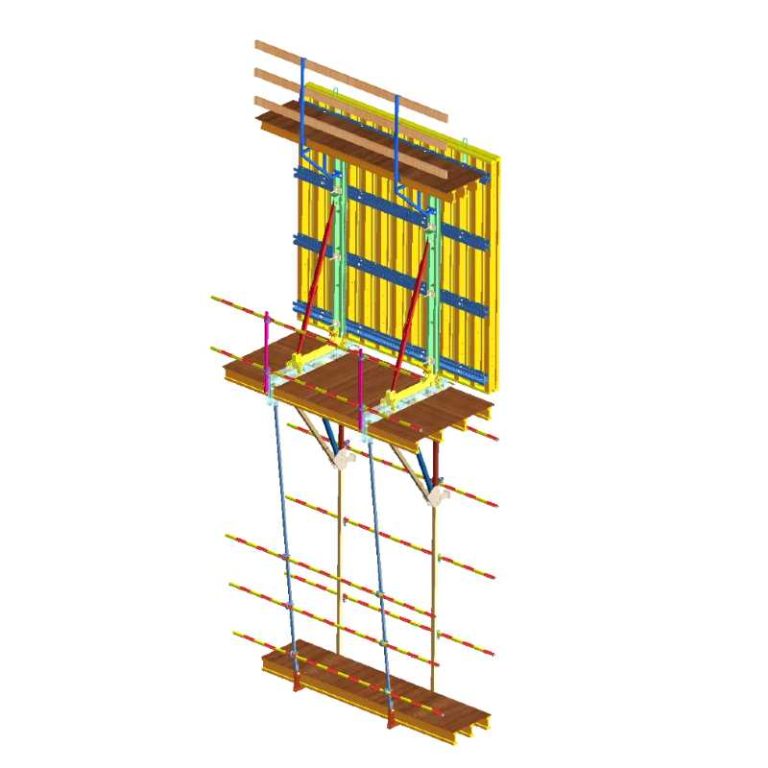
Suspended access may suit an external hull where support from below cannot reach. Where mobile towers or platforms must move, trace the route through to the working position. A short hull job still needs anchor, clearance, stability, limit and approval checks.
How Should Scaffolding Be Matched to Each Vessel Work Area?
What access approach works for curved external hull sections?
The working line on an external hull establishes where height changes need accommodation. Access points and openings also need clear space beside them. Use geometry and support conditions to compare modular with suspended access. A competent designer must check ties, loads, and edge protection; a photograph cannot establish a safe configuration.
How should teams plan access inside tanks and enclosed compartments?
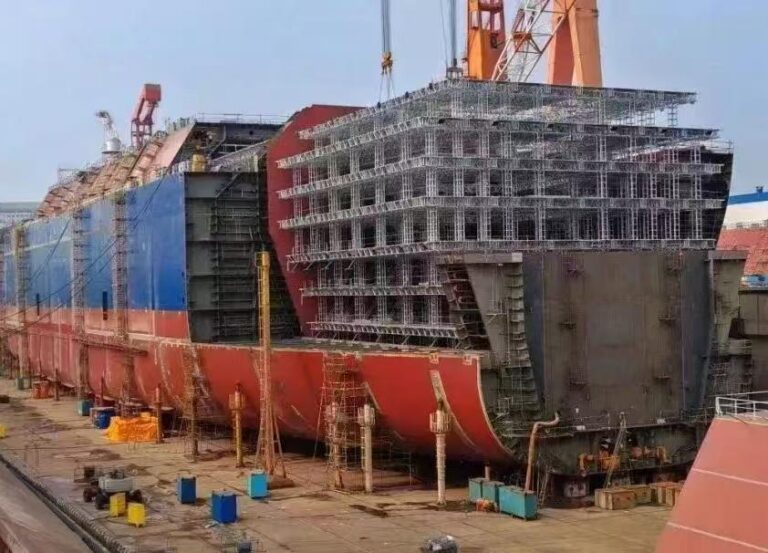
Follow the component route through the compartment opening, identifying obstructions before drawing its working zones. For those zones, record ventilation, lighting, rescue access, and work sequence together. On specialist vessels, coordinate access with installation procedures. Our Hai Yun LNG carrier case describes contoured ringlock scaffolding designed around the hull and tank curvature, with reconfiguration as work moved from structural welding to membrane installation. Its configuration cannot serve as a universal design specification.
What changes around decks, engine rooms, and hatchways?
On decks, retain material routes alongside the scaffold. Measure remaining headroom and turning space inside engine rooms and at hatchways. Review marked locations with machinery and outfitting trades. After erection, walk crew routes to equipment, escape paths and inspection points.
How Can Shipyards Plan Safe Scaffolding Through the Build Sequence?
How should work scope, access, and loads be defined before design?
Specify the work, crew, tools, duration, access, and vessel stage. Have a competent designer verify loads and support conditions. Confirm interfaces with vessel structure, lifting, adjacent trades, and equipment installation or removal.
What should erection, handover, and inspection controls cover?
Put names against the five handoffs before the scaffold package reaches site.
In the UK, HSE guidance calls for a risk review before work at height, with fall protection chosen for the conditions. Vessel geometry can demand tailored scaffold design. Check a proposed exception against a recognized standard configuration or manufacturer guidance. When neither reference works, commission a competent designer to prepare a scaffold for the specific vessel zone. Keep an assembly, use and dismantling plan available to those involved when the job’s complexity warrants one.
Design, erection, alteration, and dismantling are work for competent people, under competent supervision. First use follows inspection. No inspection interval should exceed seven days. After a safety event, reinspect the scaffold before use. Check local rules and approvals for each project location. At handover, show crews the permitted routes, latest inspection status, and how to report any unsafe access.
How should changes, relocation, and dismantling be managed?
Record authorization and design or inspection revisions before relocation or modification. Tell trades about the change before reopening access. Keep workers below clear and vessel escape routes open during removal.
How Can Buyers Evaluate Shipyard Scaffolding Proposals?
What design and compatibility evidence should a proposal provide?
We carry out research and development, together with production. Our formwork and scaffolding scope includes sales, leasing, construction, and operation. Mark retained shipyard activities alongside those offered in the supplier’s scope. Require access positions marked on vessel drawings or a site survey. Design assumptions should explain the layout. Review access positions against load and support checks, component identification, and operating limits. For each proposal, put a name against engineering, erection, inspection, changes, and handover. Record which proposed components the manufacturer’s instructions cover. Any compatibility question left open belongs on the proposal review list. A component list leaves unanswered whether the proposed arrangement fits its vessel zone.
How can teams compare usable access, installation effort, and schedule fit?
Mark the crew access points, trace their reach, and measure the working space left on each layout. Identify the fabrication or outfitting milestone served by each alteration step and check its timing. Where nearby trades would conflict, ask which routes remain available during the change. This makes the installation effort and reconfiguration visible against the dock or build schedule.
Which lifecycle and delivery factors belong in total-cost review?
Allow for transport, storage, inspection and maintenance, then relocation, dismantling, and planned reuse alongside equipment costs. Record arrival dates separately from scope exclusions. For later changes, include labor and work interruption; omissions can make an incomplete scope appear cheaper. Supplier and delivery questions are addressed separately in our shipyard scaffolding sourcing guide.
الأسئلة الشائعة
Q: What is shipyard scaffolding used for?
A: Shipyard teams use these temporary platforms to reach hulls and confined work areas during construction, fit-out, inspection, coating, or repair work. The task location and approved method shape each arrangement.
Q: What type of scaffolding is best for shipbuilding?
A: Assess each vessel zone. The work position and support conditions rule out unsuitable options. For modular, tube-and-coupler, suspended, or mobile access, compare duration and mobility before applying the local engineering requirements.
Q: How do you scaffold a ship hull?
A: Locate the work on a survey of the hull section. A designer can use survey measurements to set support points, ties, access, edge protection and design loads. Ask a designer to compare modular and suspended access against survey dimensions before choosing the work method.
Q: Can ringlock scaffolding be used inside a vessel?
A: It may, if the vessel-specific layout passes engineering review. Compare the opening, working space, task and support conditions with the proposed layout. Check ringlock dimensions against instructions for each component before use.
Q: What should I check before choosing shipyard scaffolding?
A: Locate the work scope within its vessel zone. Check geometry, access and escape routes, loads, and support points against concurrent trades and build sequence. Confirm inspection planning and responsibilities.