

What Makes Aluminium Formwork Reuse Valuable?
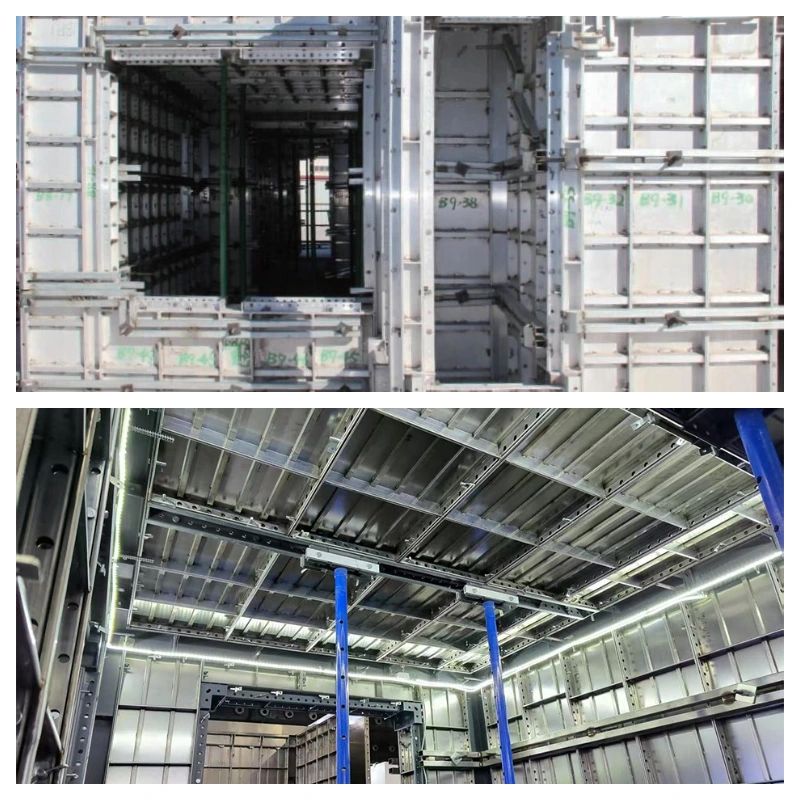
Aluminium formwork is a temporary mould assembled from panels and supports to contain fresh concrete until it has gained the required form. Due to high initial cost, aluminium formwork should be designed for repetitive use. Before using aluminium formwork, the formwork planner should ensure that cast concrete will achieve the desired shape, position and finish. The reuse of aluminium formwork for successive castings must be systematically planned. The main issues are: – the number of reuses required; – the performance of the formwork at each reuse; – the procedures that govern the reconditioning of the formwork between uses.
Count usable pours rather than theoretical cycles
Before the commencement of work on a project, the formwork design should be checked and approved by a suitably qualified person. In addition, formal work method statements, including details of inspection and checking procedures and the design and maintenance of the formwork, may be required. The formwork system should be checked to ensure that it is designed to safely sustain all vertical and lateral loads, and that the various forms are correctly assembled and erected in accordance with the design. The requirements for completion of inspection and checking at each stage of erection or assembly, and the signature of the competent supervisor or checker, should be defined.
Compare costs on the same basis
The number of re-uses to be expected from each type of formwork is a matter for judgement, but in considering the economical and safe use of aluminium forms, it is essential to establish the number of uses assumed in the costings.
There are some risks in predicting a given number of uses for a particular type of formwork, because much depends upon:
- the design of the formwork relative to the expected service;
- the standard of handling;
- the care taken in stripping and cleaning;
- the effects of erosion or adherence of concrete;
- the standard of maintenance between uses.
Which System Details Protect Reuse Potential?
Check panels against their specified dimensions
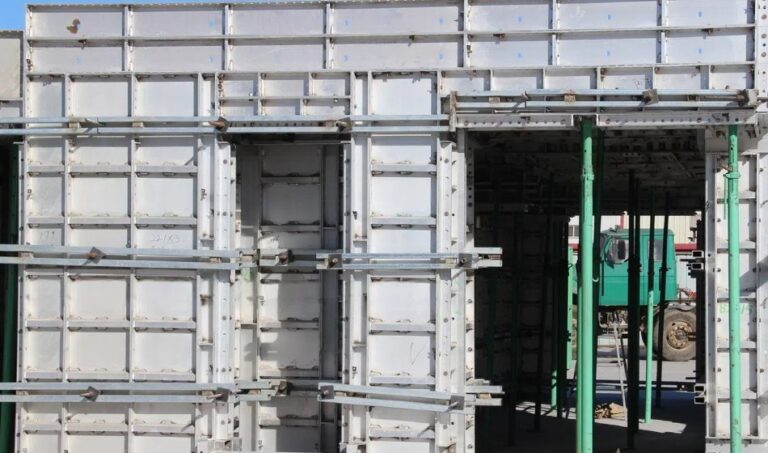
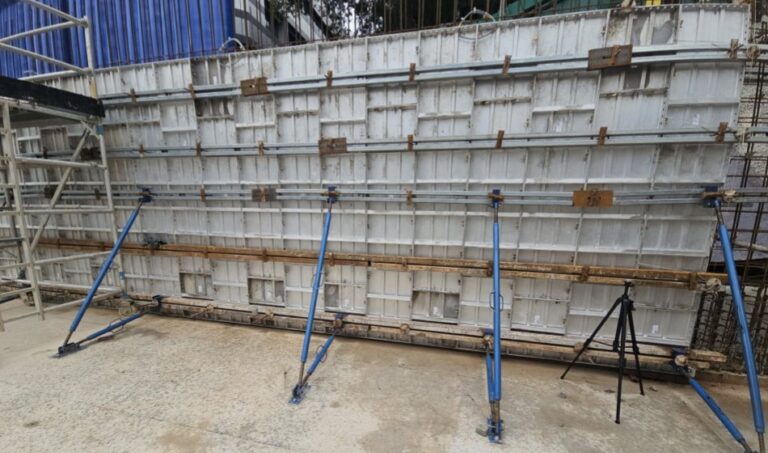
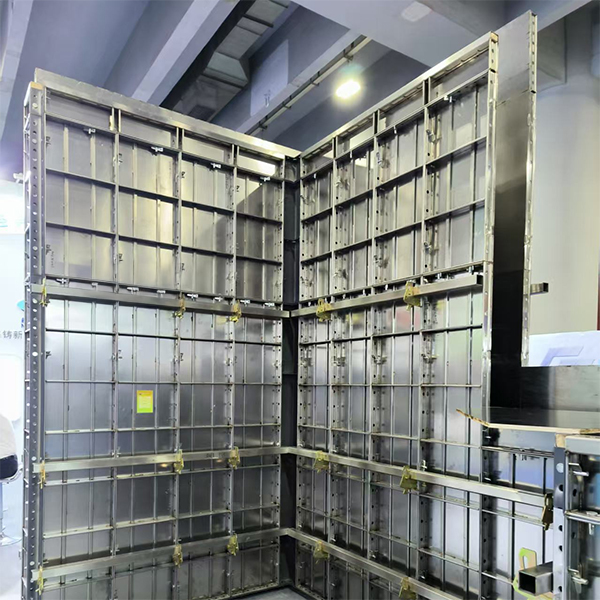
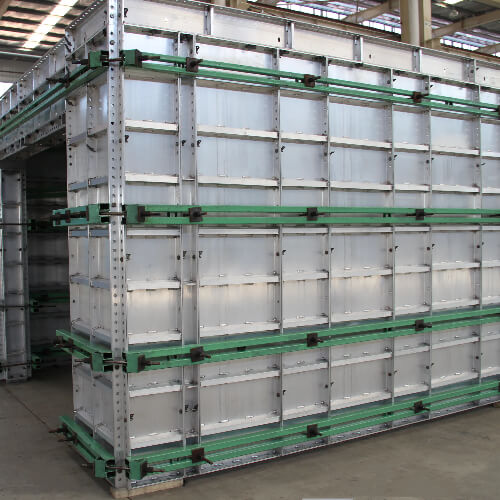
Unser Aluminiumschalungssystem uses Aluminium Alloy 6061-T6. The specified panel thickness is 4 mm, and the listed aluminium panel weight is 25 kg/m2. Standard wall panel widths range from 50 to 600 mm; listed heights are 2400, 2500, 2600 and 2700 mm.
Standard slab panel sizes use the listed widths with a length of 1100 mm. Confirm the required dimensions against the current project drawings before treating stock as reusable.
The aluminium form can be used with a suitable mould release agent.
The formwork system should be designed to support all vertical and lateral loads likely to be imposed during construction, including the dead weight of the formwork, the weight of the reinforcement, the weight of the wet concrete, the loads imposed during placing (for example, impact and vibration), and the wind loading.
Continuous consideration of stability should be ensured during the erection and stripping processes.
Keep connections and supports complete
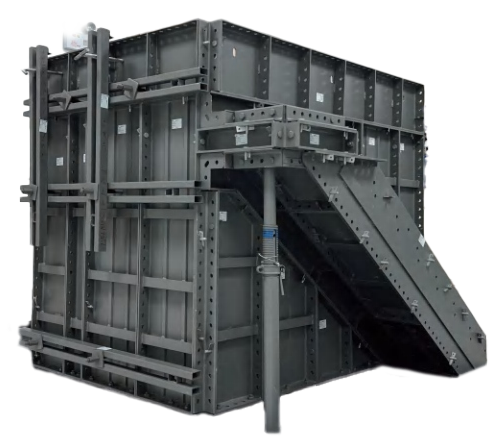
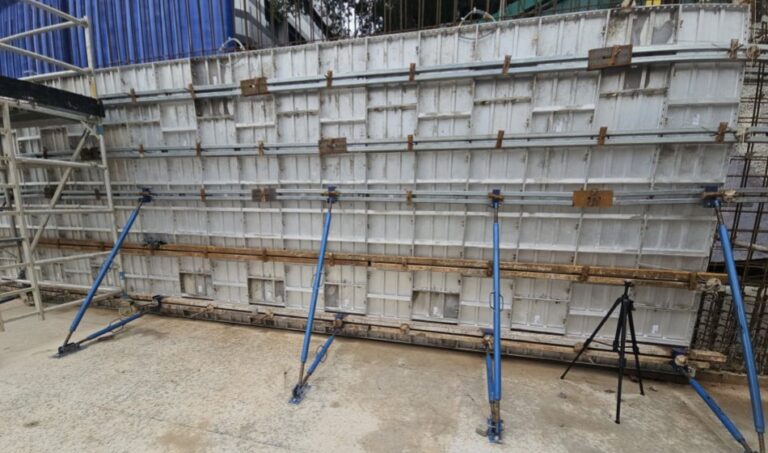
Wall end panels fill areas where standard wall panels cannot fit. Stair formwork includes tread, riser and side panels, connectors and supports.
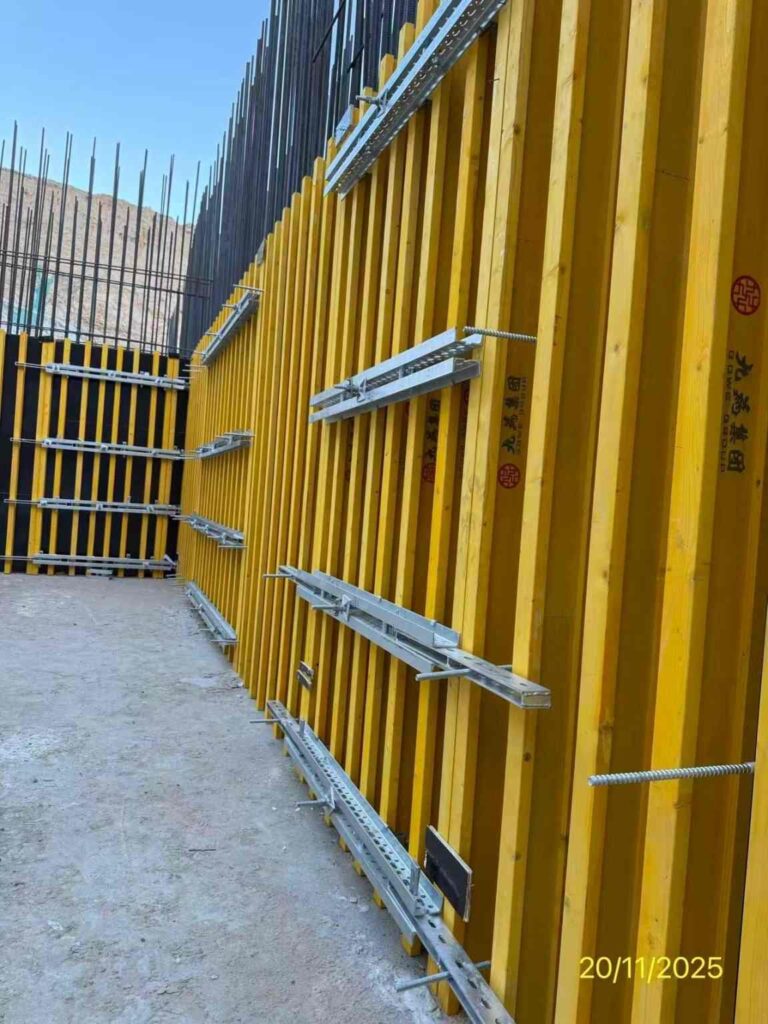
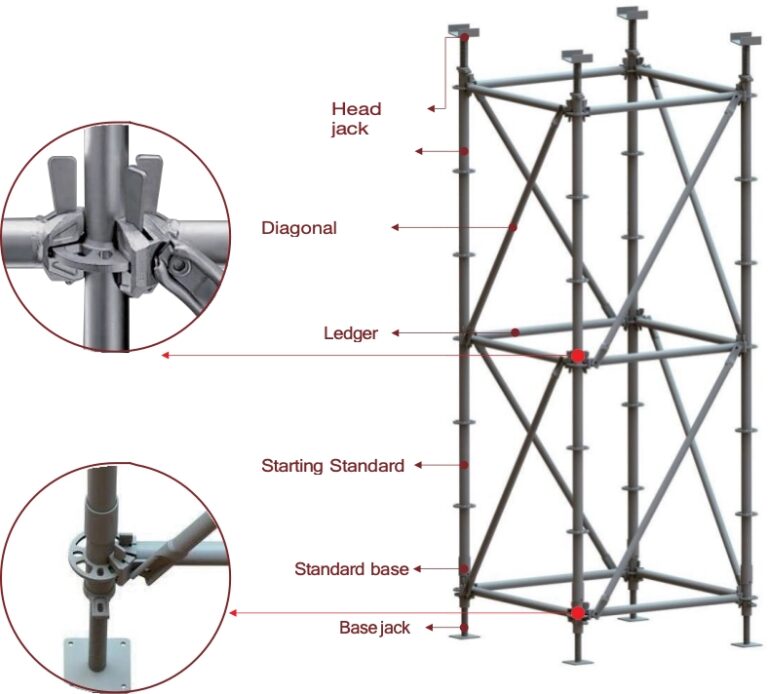
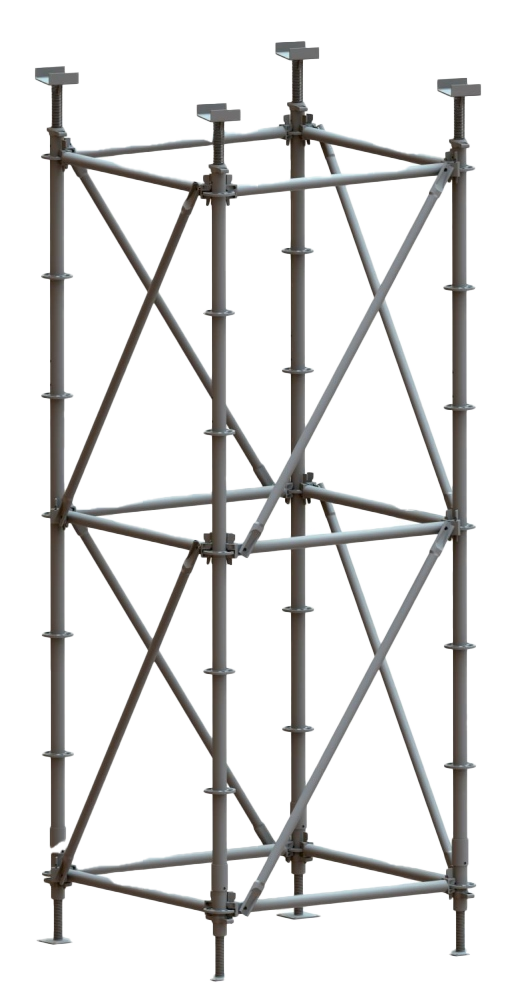
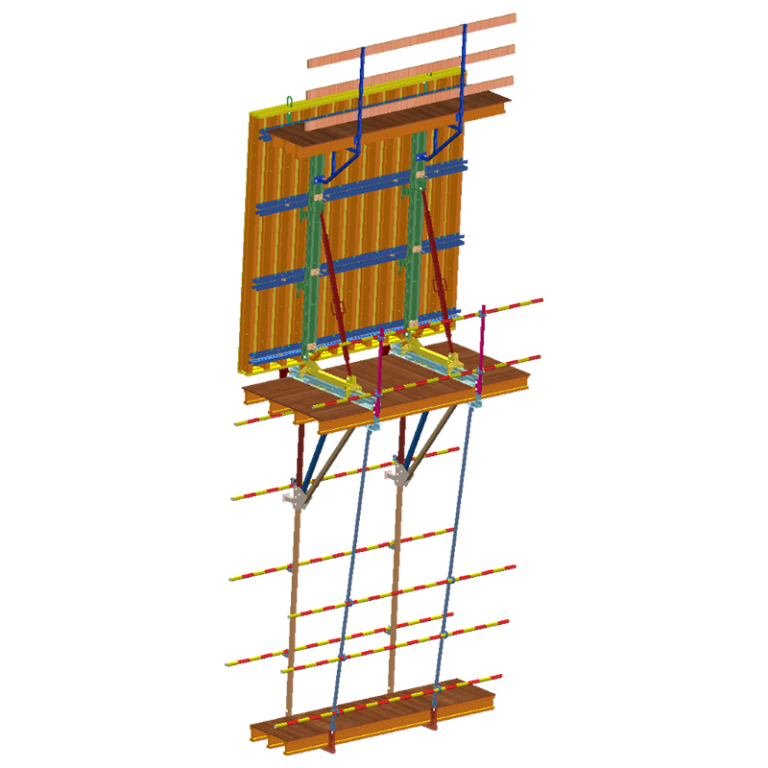
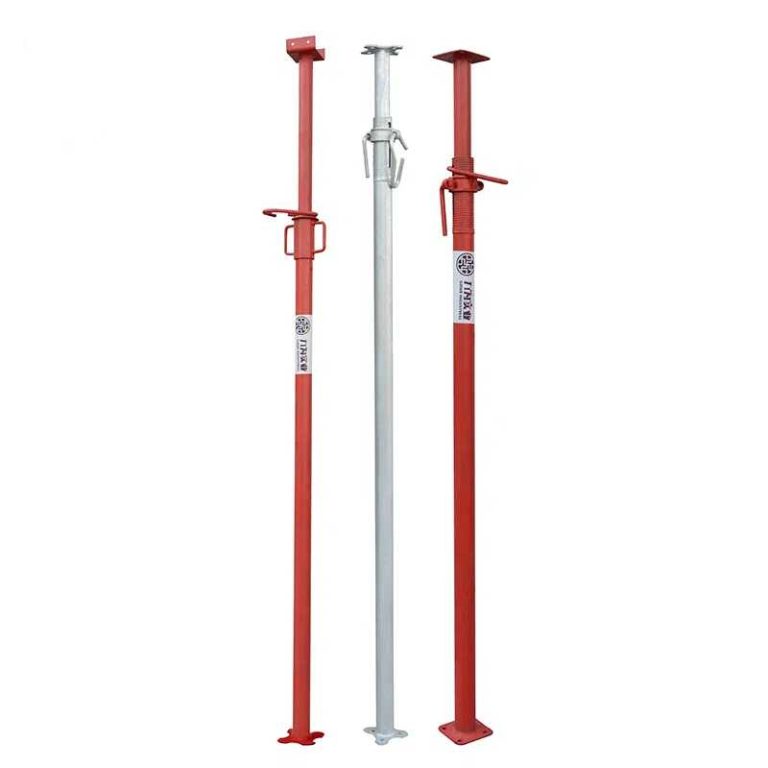
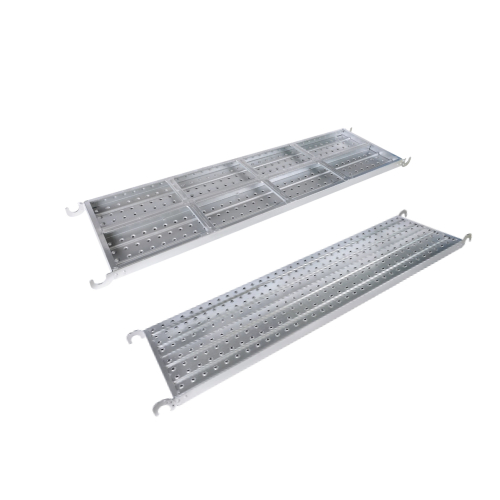
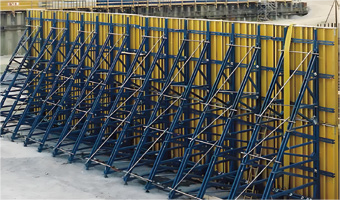
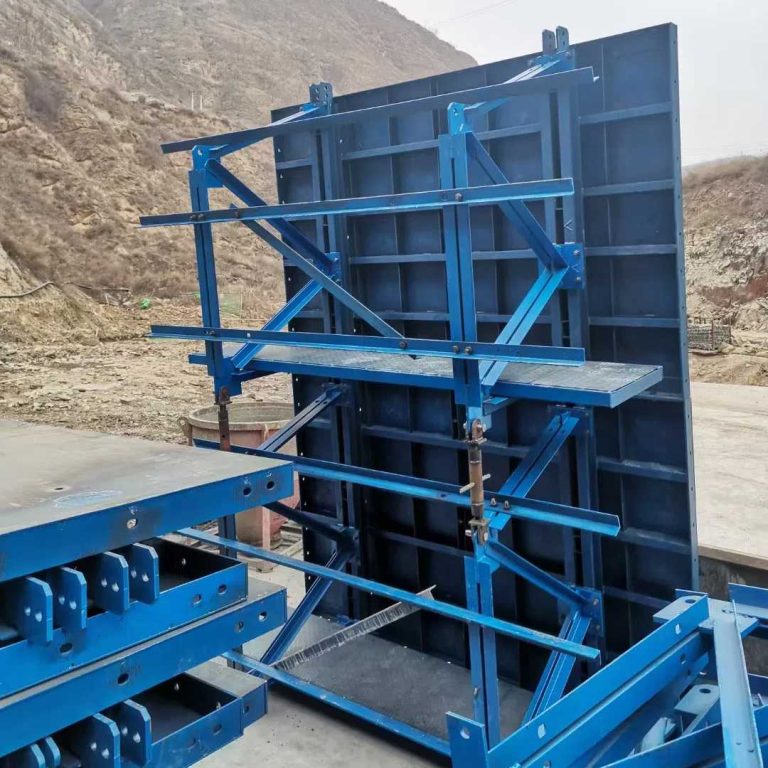
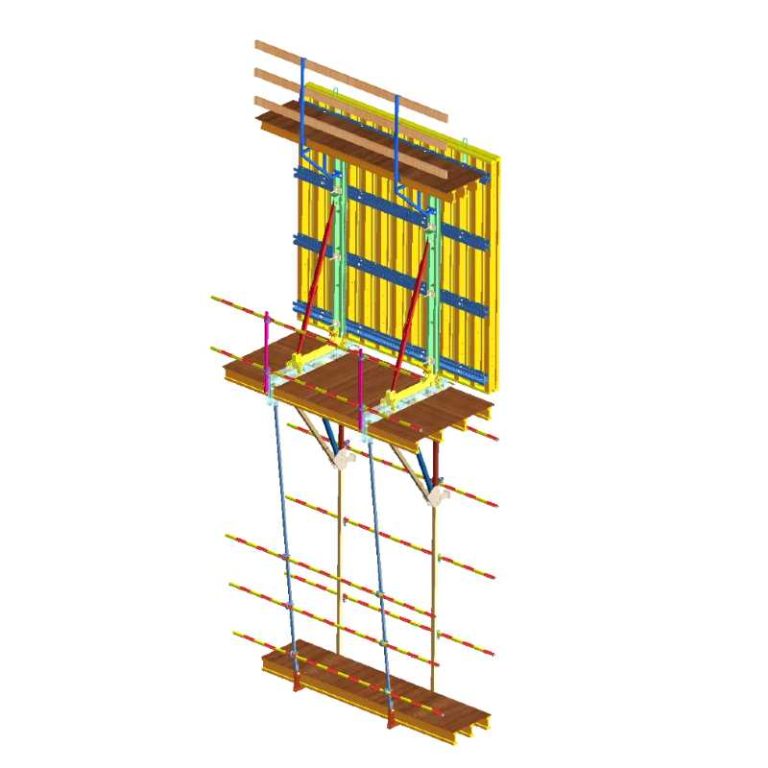
The listed accessories include pins and wedges for joining panels, steel props for vertical support, adjustable support bases, hollow sections for wall straightness, walers, raking shores, tie bars, flat ties and waler brackets. Transfer boxes move panels after dismantling. Count these items with the panels when checking whether an assembly is complete.
Selection should ensure that the proposed formwork can resist all loads, meet the required tolerances and produce the intended finish.
Before assembly for a pour, check the supports and check that the previous pour has developed sufficient strength, or that the structure is capable of supporting the loads to be applied.
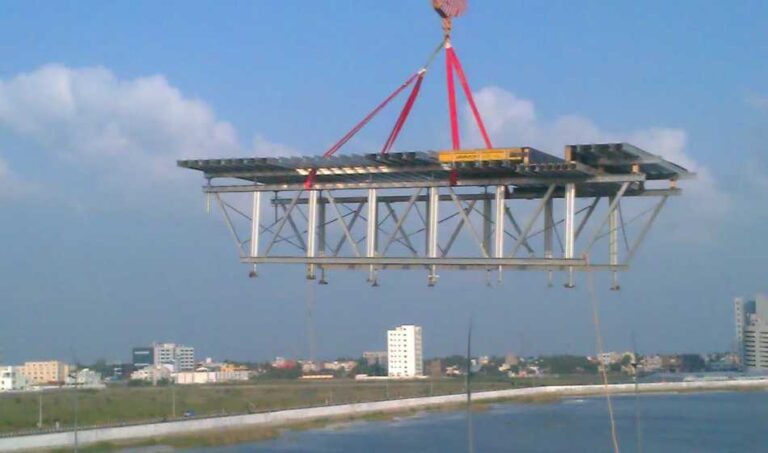
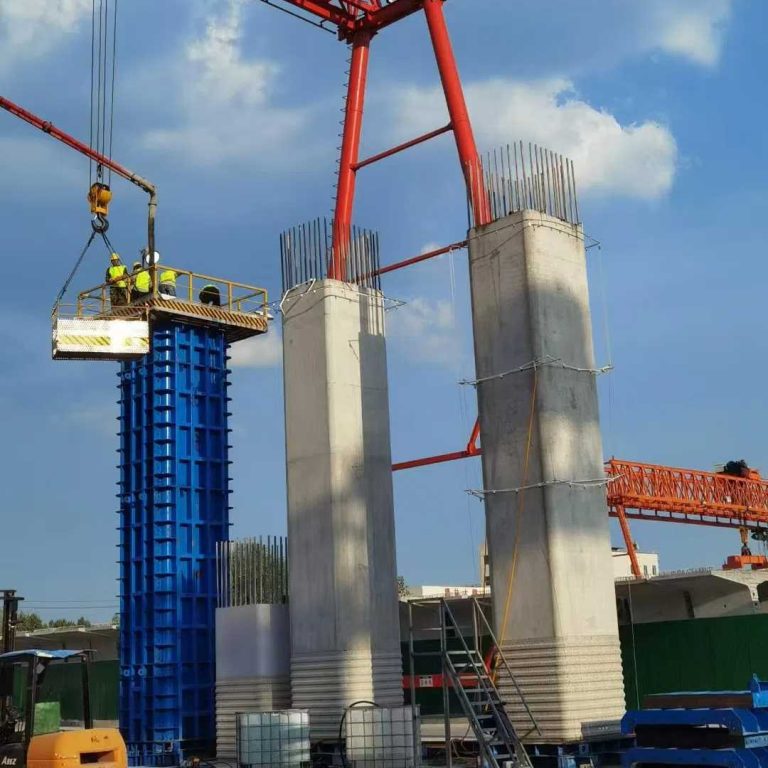
The formwork should be erected in accordance with the drawings and the maker’s instructions. It is recommended that for repetitive use the formwork is pre-assembled into units and lifted as such.
During erection, check that the formwork is built to the required line and level and that the wedges are fixed to the pins.
How Does Site Handling Affect Long-Term Value?
Separate surface marks from defects
Oxidation can cause dirt spots on aluminium alloy formwork without compromising material quality or concrete finish quality. Powder coating can mitigate oxidation, but powder-coated formwork can peel under varying site conditions.
Before each re-use, clean the formwork thoroughly.
Striking should be undertaken with care to avoid damage to the concrete face or to the formwork. It is usual on repetitive work to remove the forms, clean them and transfer them to the next position. Any concrete build-up should be removed by a suitable tool and the formwork given a light coat of mould release agent.
Record inspection and transport damage
At GOWE, our quality management process includes incoming material inspection, in-production inspection, finished product inspection, pre-shipment debugging, transportation inspection and controlled transportation to the construction site.
Panel life and usable reuse also depend on inspection, transportation and site handling, not on panel material alone.
Damaged components should be removed from use.
Before and after each use, check the formwork for damage and wear or deformation. All repairs should be carried out by a responsible and experienced operative.
Can the System Fit the Next Project?
Match inventory to the next drawings
Construction efficiency can be improved by ensuring regular and standardised dimensions.
Aluminium formwork can be adapted to buildings of different geometry. However, the extent of adaptation depends on building size, shape, layout and type of construction.
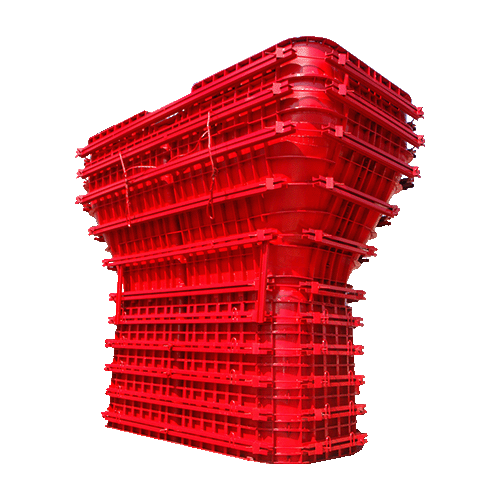
The formwork is normally manufactured from aluminium sheet or extrusion to suit the requirements of each project. When not in use, it should be stored so that it is protected from damage and properly supported, with all components stacked and identified.
The frequency and extent of inspections and maintenance depend upon the formwork system’s usage and the nature of the conditions.
Check trial assembly before dispatch
We design and customize production according to engineering drawings. Factory trial assembly can help identify problems before transport to site. Product dimensions, shapes, surface treatments and quality standards can be customized to requirements. This does not establish that every existing panel fits a later project without modification.
The frequency and extent of inspection and maintenance should be defined, and you should check that the design and inspection regime meet the specific requirements for each project.
The system is suitable for repetitive work, but the number of re-uses available is not unlimited. Reuse depends on the design, use, and level of maintenance and inspection that the system receives.
If the panels are not regularly inspected, maintained and repaired, they may not perform as specified.
What Should Contractors Record Before Reordering?
Build a component and cost record
Record keeping to identify each panel should be considered for projects where verification of re-use is required.
Re-use of aluminium formwork requires adequate records to demonstrate that the system has been maintained in a suitable condition and is capable of being re-used.
The system should be the subject of a regular planned inspection and maintenance regime.
Re-use should be in accordance with the formwork design and specification.
The formwork should be handled and transported carefully to avoid damage.
The records should include quantity, size and specification of components, the number of times re-used, any damage and repairs, and the results of the latest inspection.
Turn the records into a purchasing decision
The purchase decision should not be based on initial cost alone. Life-cycle cost, including maintenance, transport and storage, should be considered.
The most important considerations are:
- the initial cost;
- the number and rate of re-use;
- the cost of reconditioning and maintenance;
- achievable concrete finish and the cost of any remedial work;
- useful life.
In common with other forms of construction, the durability of aluminium formwork depends upon the conditions to which it is exposed and the level of maintenance that it receives. Durability and performance are not guaranteed by the material alone.
FAQ
Q: How many times can aluminium formwork be reused?
There is no fixed number. Assess condition, accessory completeness, handling history and fit with the next layout.
Q: What determines aluminium formwork reuse value?
Value reflects usable output from a complete set against the costs of returning it to service.
Q: Can aluminium formwork transfer to another project?
Re-use between different projects may require adaptation of the formwork system.
Re-use should not rely on the assumption that formwork from a previous project will be suitable without checks.
Q: Do oxidation marks make aluminium formwork unusable?
Oxidation is a normal process for aluminium exposed to the atmosphere.
Oxidation can be minimised by keeping the formwork clean and dry when not in use.
Q: Is cleaning enough to prepare aluminium formwork for reuse?
Erection and stripping should be carefully planned.
The formwork should be inspected before each use.