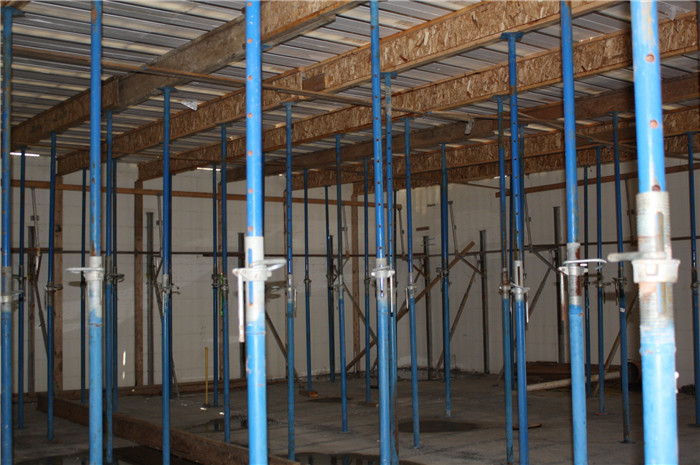
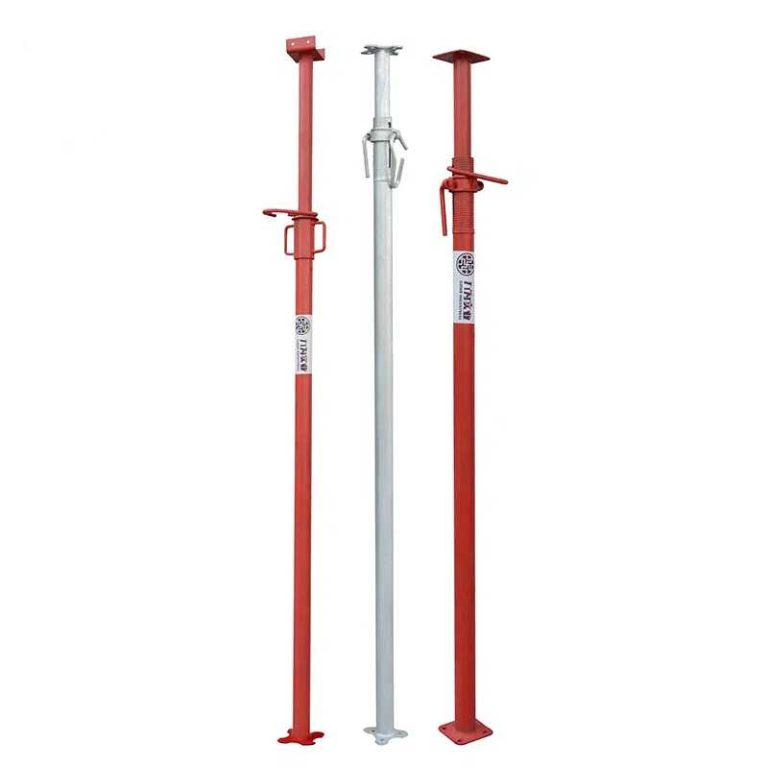


What is a Steel Prop?
Why We Use Telescopic Steel Props
Adjustability is Key
Strength and Durability
One Tool, Many Names: Post Shores and Jack Posts
- Adjustable Steel Props: This is the most common name used globally.
- Post Shores: This is the term you will mostly hear in North America and in large-scale engineering projects. It refers to the “shoring” (supporting) of a structure using a post.
- Jack Post: This term is often used for residential work, like supporting a sagging floor in a basement or holding up a porch while it is being repaired.
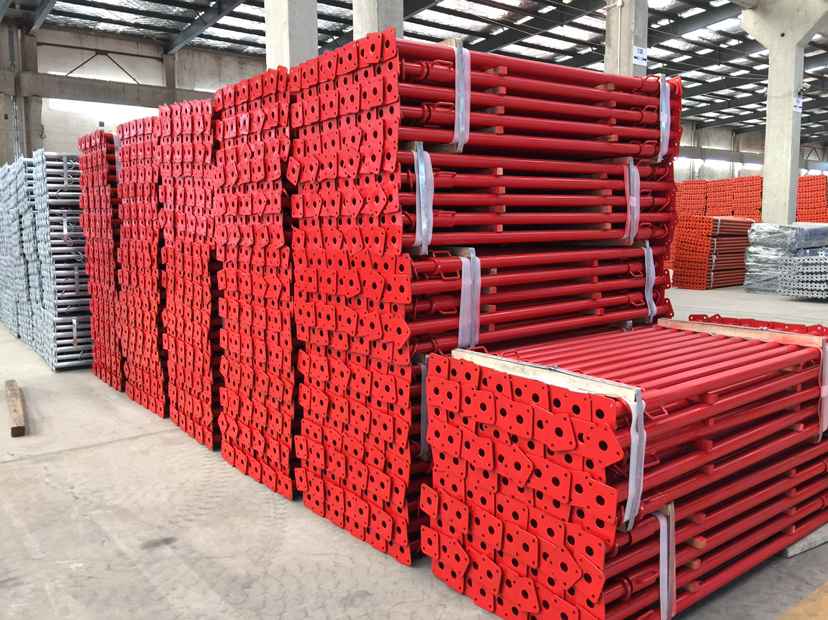
How Does an Adjustable Steel Prop Work?
- The Outer Tube: The thick bottom part that stands on the ground.
- The Inner Tube: The part that slides up to reach the ceiling or the formwork.
- The Steel Pin: A heavy-duty bolt that goes through holes in the tubes to set the general height.
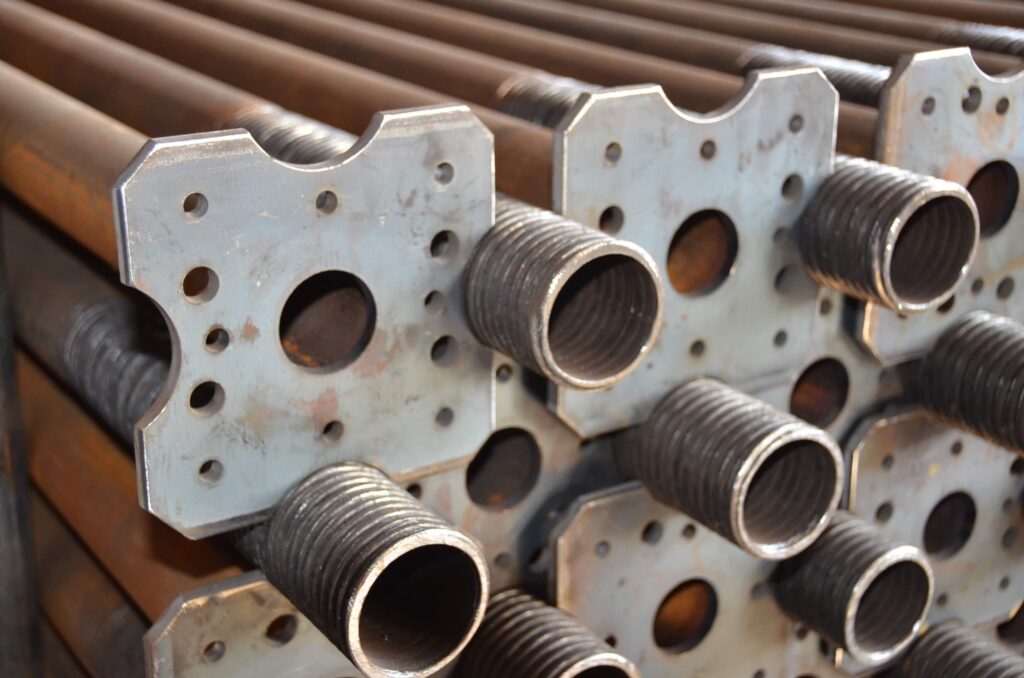
- The Adjustment Nut: A threaded collar that you turn to fine-tune the height to the exact millimeter.
Technical Comparison: Why GOWE is the Better Choice
|
Material
|
High-Grade Q235/Q345 Steel | Wood/Timber |
|
Height Control
|
Fully Adjustable
|
Fixed (Needs cutting) |
|
Reuse Value
|
100+ Times | 5-10 Times |
|
Segurança
|
High (Fireproof & Reliable) | Medium (Flammable & Variable) |
Safety Tips for Using Steel Props on Site
- Check the Ground: Never place a steel prop on soft mud or loose dirt. It needs a solid base (like a timber sole plate) so it doesn’t sink under pressure.
- Keep it Straight: A prop is strongest when it is perfectly vertical. If it leans even a little bit, it loses its ability to hold weight and could buckle.
- Don’t Overextend: Every steel prop has a maximum safe height. If you pull the inner tube out too far, it becomes less stable. Always check the GOWE load chart.
- Inspect Your Gear: Before use, check for any deep dents, rusted parts, or cracks. GOWE recommends a quick inspection every time a prop returns from a job site to ensure it’s ready for the next one.
Sustainability: A Green Choice for Construction
Conclusão
Perguntas Frequentemente Fazidas (FAQ)
Q: What is the maximum load capacity of an adjustable steel prop?
A: The load capacity of a escora de aço depends on its diameter, material thickness, and extension height. Generally, a Gowe heavy-duty prop can support between 20kN to 35kN. However, as the telescopic inner tube is extended higher, the load capacity decreases. Always refer to our technical load charts before installation.
Q: How do I choose between a painted and a galvanized steel prop?
A: If your project is in a dry, indoor environment, a painted steel prop for construction is a cost-effective choice. However, for outdoor projects or sites in coastal and humid areas, we strongly recommend galvanized post shores. The zinc coating prevents rust and significantly extends the life of the prop.
Q: Can I use a jack post for permanent structural support?
A: While adjustable steel props are incredibly strong, most are designed for temporary shoring during construction. If you need a jack post for permanent support (such as in a residential basement), ensure you choose a model specifically rated for permanent installation and consult with a structural engineer.
Q: How many steel props do I need for my concrete slab?
A: This depends on the thickness of the concrete slab and the weight of the formwork system. Generally, post shores are placed every 1 to 2 meters. Gowe’s engineering team can help you calculate the exact spacing needed to ensure maximum safety and efficiency.
Q: What should I do if the adjustment nut is hard to turn?
A: This is usually caused by concrete dust or debris in the threads. Gowe props feature a self-cleaning thread design, but it is always best to clean the threads with a wire brush and apply a small amount of light oil to keep the adjustable mechanism working smoothly.