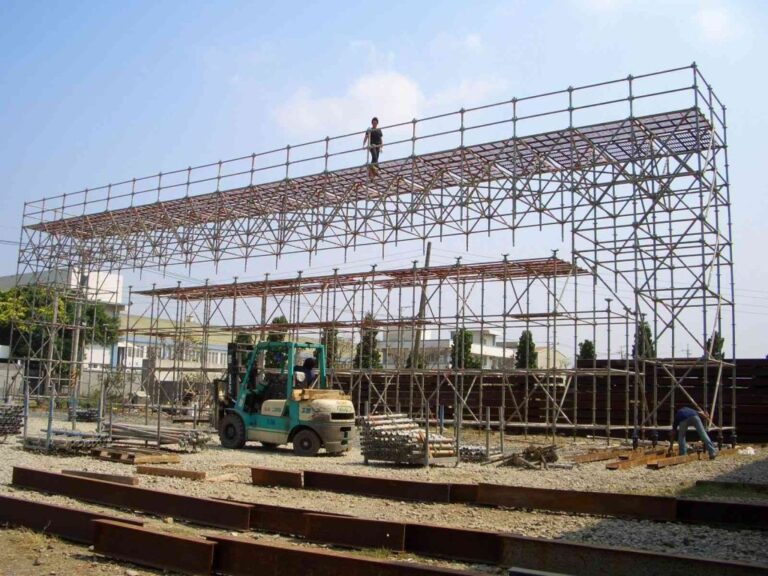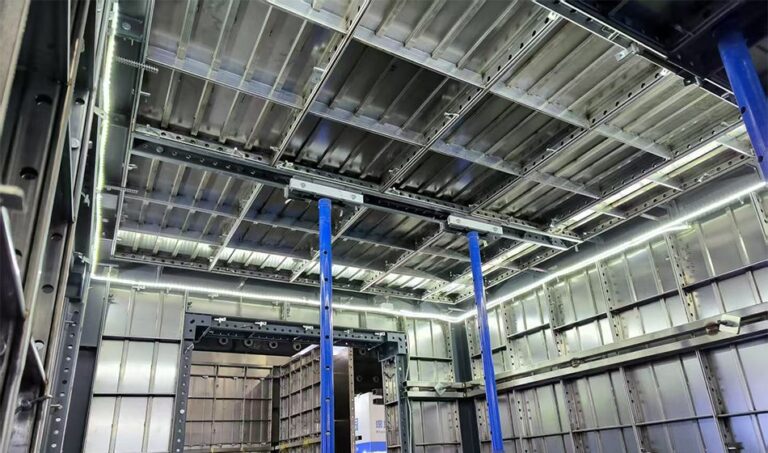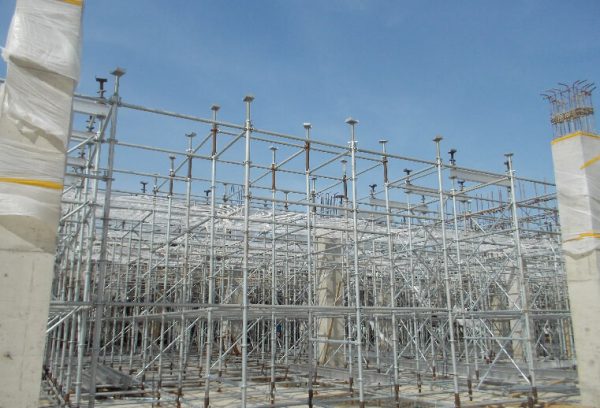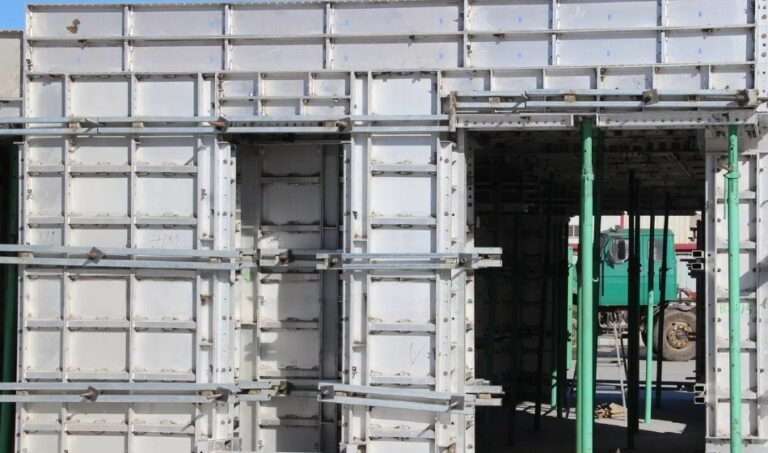



A scaffold tower gives workers a firm raised platform. This occurs when a ladder gives too little workspace. Full façade scaffolding would not be needed then. But picking the tallest tower available is seldom the safest choice. The right solution needs to fit the task. It must match platform load, ground conditions, working duration, movement frequency, and local safety requirements.
A task-first approach works better than selecting equipment by height alone. Contractors should begin by asking what workers need to carry. They must consider how often the platform must move. They also need to know how long the work will continue. Finally, they should check whether the surrounding environment may change during the job.
What Is a Scaffold Tower and When Should It Be Used?
How Does a Scaffold Tower Work?
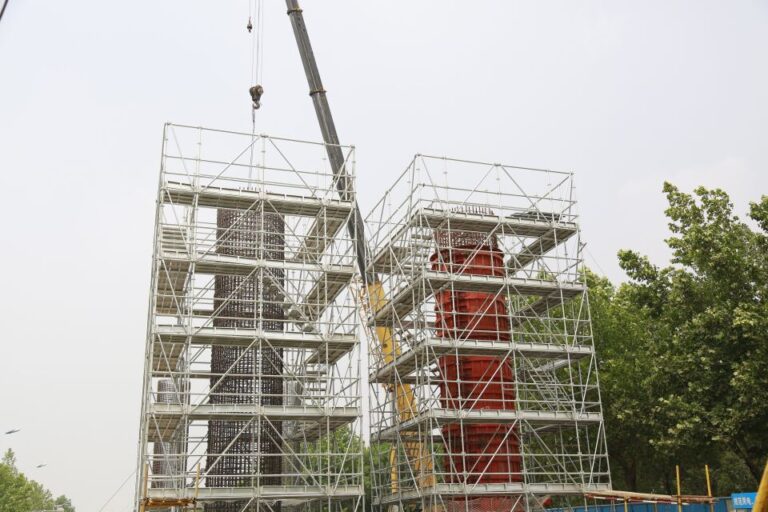
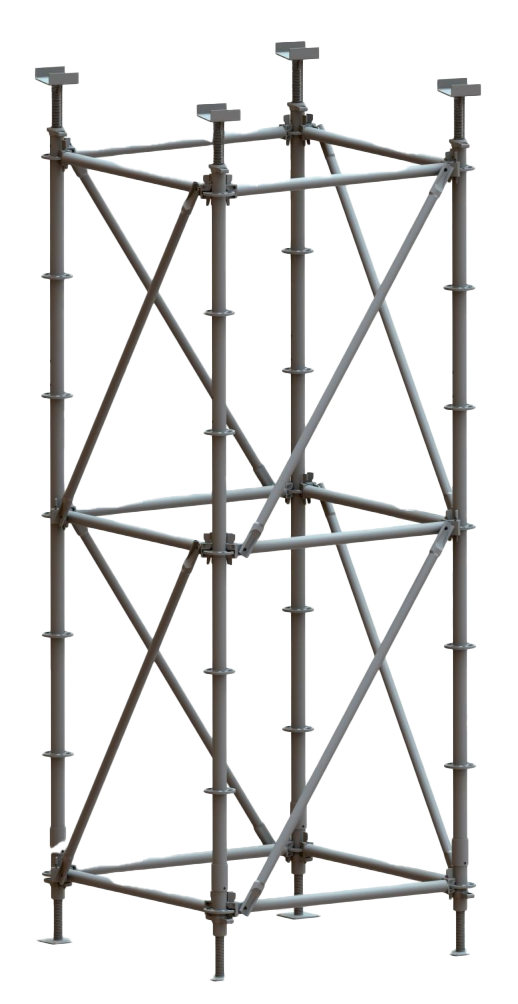
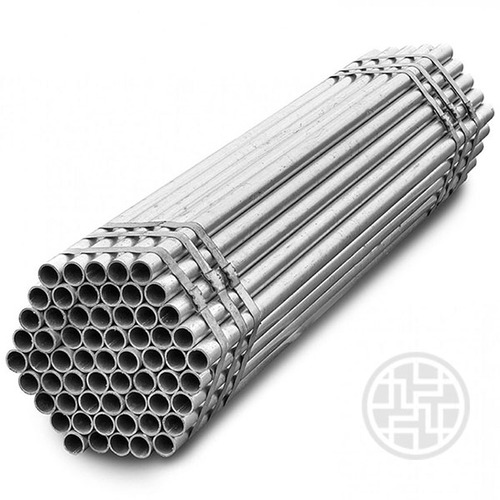
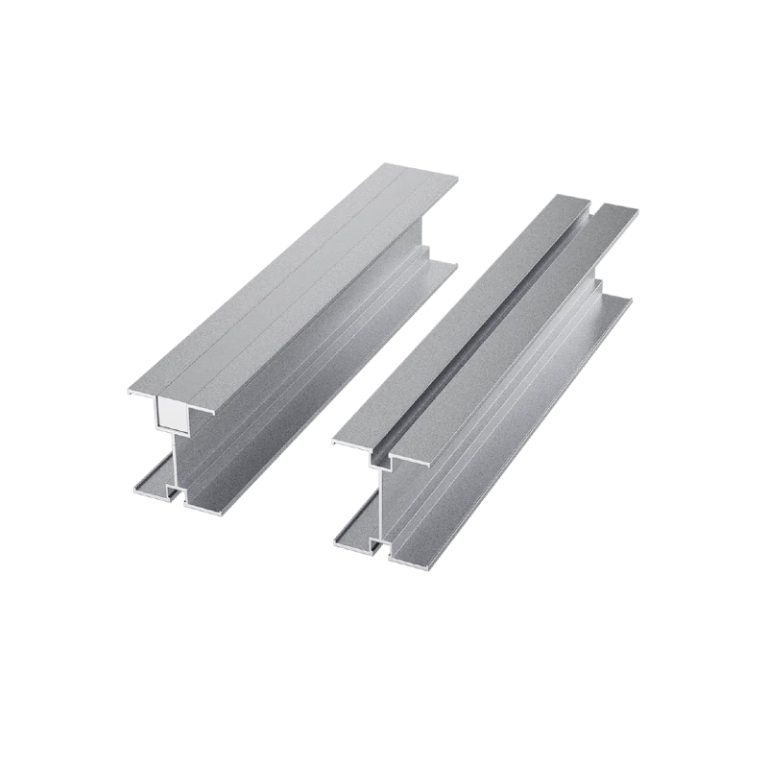
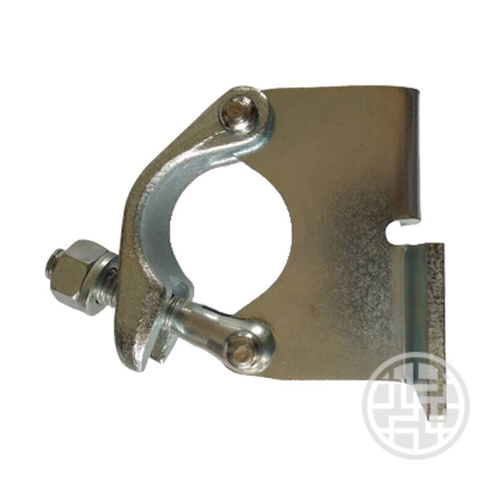
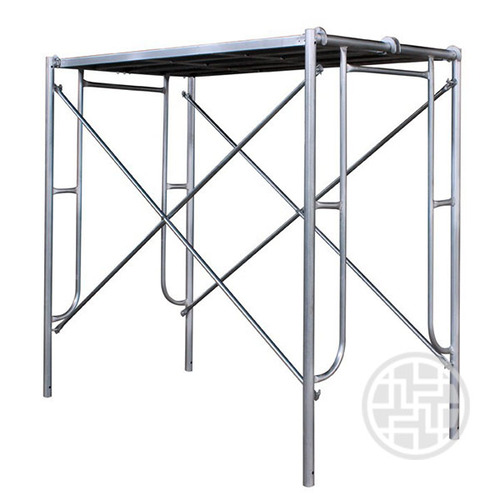
A tower combines vertical members, horizontal ledgers, diagonal braces, platforms, guardrails, access components, and adjustable bases or castors. These parts together move worker, tool, and material loads safely to the ground. They also control movement and sway.
Unlike a ladder, a tower scaffolding system creates a platform where workers can use both hands. They can reposition tools there. They can finish longer tasks without climbing down again and again. This makes the tower useful for installation, repair, inspection, painting, and finishing work.
Mobile Scaffold Tower vs Fixed Tower
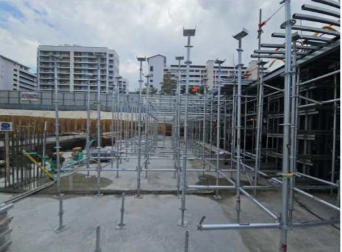
A mobile scaffold tower works well for repeated tasks across a firm, level surface. Lockable castors let the tower be repositioned without taking apart the whole structure.
A fixed tower is usually more suitable for longer-duration work. It fits heavier materials, wind exposure, irregular ground, or sites where movement is not needed. The decision should consider stability and workflow rather than mobility alone.
Scaffold Tower vs Ladder or Full Scaffolding
A ladder may be enough for brief inspections or light work at a limited height. But tasks involving power tools, materials, repeated movement, or extended working time normally need a protected platform.
Full scaffolding is more suitable when workers need continuous access across a large façade. A scaffold access tower fills the space between these options. It provides concentrated access without surrounding the entire structure.
How Do You Choose the Right Scaffold Tower?
Match Height, Load, and Platform Space
Calculate both platform height and scaffold tower working height. Working height includes the worker’s reach. Platform height refers to the actual standing level. Mixing up these measurements can lead to excessive reaching or unsafe attempts to raise the platform.
The platform must also hold the expected number of workers, tools, and construction materials. Loads should not be estimated only by total weight. Placing heavy materials in one area can create greater risk than spreading the same weight evenly.
Consider Ground Conditions and Access Routes
Before selecting a tower, examine floor strength, slopes, door widths, overhead services, nearby traffic, and external weather conditions. A narrow indoor tower may pass through doorways easily. Outdoor work may require a wider base and extra stabilisation.
Adjustable bases can compensate for small differences in level. But they cannot make weak soil, loose blocks, or improvised foundations safe.
Select the Structure for the Site
Regular elevations may suit frame-based access. Irregular structures often benefit from modular connections. At GOWE, we manufacture steel scaffolding rather than aluminium scaffolding. We use grades such as Q355 and Q235 for different structural components.
Our ringlock scaffolding system uses standards, ledgers, diagonal braces, adjustable bases, and head jacks. These form adaptable support and access configurations. Its wedge-pin connections support efficient assembly and reliable force transmission.
How Do You Complete a Safe Scaffold Tower Setup?
Prepare the Ground and Components
A safe scaffold tower setup begins before the first component is installed. Check ground-bearing capacity, floor openings, overhead electrical services, vehicle routes, pedestrian access, and weather forecasts.
Each frame, standard, brace, platform, connection, wheel, and locking device should be inspected. Bent, cracked, heavily corroded, or mismatched components must be removed. They should not be temporarily repaired on site.
Build in the Correct Sequence
Start with a square and level base. Install the vertical members, ledgers, and diagonal braces in the manufacturer’s specified sequence. Platforms, internal access, guardrails, toe boards, and stabilisers should then be added at the correct stage.
Bracing should not be postponed until the tower reaches its final height. Installing stabilising components step by step helps control movement throughout assembly.
Complete the Final Inspection
Before use, confirm that the tower is vertical. All connections must be locked. Castors need to be secured. Platforms should be complete, and edge protection must be correctly installed. The access route should be clear. The load limit should be understood by everyone using the platform.
A tower is not ready simply because it appears stable. A structured scaffold tower safety inspection is necessary before workers climb onto it.
How Should a Scaffold Tower Be Used and Moved Safely?
Control Access and Platform Loading
Workers should use internal ladders or designated access openings. They should not climb the outside of the tower. Platform hatches should remain closed when not in use.
Tools and materials must be organised to preserve clear movement space. Guardrails should never be used as storage supports. Workers should not stand on boxes, ladders, or temporary platforms to gain additional height.
Move the Tower Without Creating New Risks
No person should remain on a mobile scaffold tower while it is being moved. Tools, materials, and unsecured objects should also be removed.
The movement route must be checked for slopes, debris, floor openings, overhead obstacles, and soft surfaces. After relocation, castors must be relocked. Stabilisers need to be reset. The complete tower must be checked again.
Stop Work When Conditions Change
Strong wind, heavy rain, impact, ground settlement, missing braces, or unauthorised modification can make a previously safe tower hazardous. Work should stop whenever site conditions differ from those considered during the original assessment.
This is especially important outdoors. Weather and nearby construction activity may change faster than the work plan.
Where Are Scaffold Towers Most Versatile?
Construction and Maintenance Applications
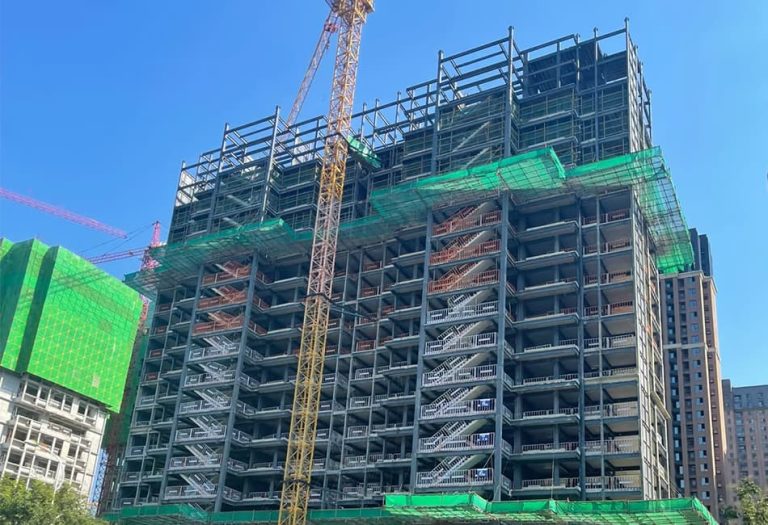
Tower configurations can support masonry, façade repair, MEP installation, ceiling work, painting, warehouse maintenance, and public-building refurbishment.
The most versatile system is not necessarily the one with the greatest number of components. It is the one that adapts to the task. It does so without encouraging workers to remove braces, exceed load limits, or create improvised extensions.
Southeast Asian Projects and Cost Control
In humid Southeast Asian environments, scaffold cost is heavily influenced by assembly labour and material service life. Repeated erection and dismantling can consume significant working hours. Poor corrosion protection can shorten component life.
On the Xinda Malaysia Project, modular ringlock scaffolding supported an organised assembly process suitable for project requirements. Hot-dip galvanised components help resist corrosion. They extend service life in humid conditions and reduce the need for premature replacement.
From a project-management perspective, durable components and repeatable connections address two practical cost concerns. These are fewer labour hours spent correcting inconsistent assemblies and fewer materials discarded because of early corrosion.
High-Rise Construction Access
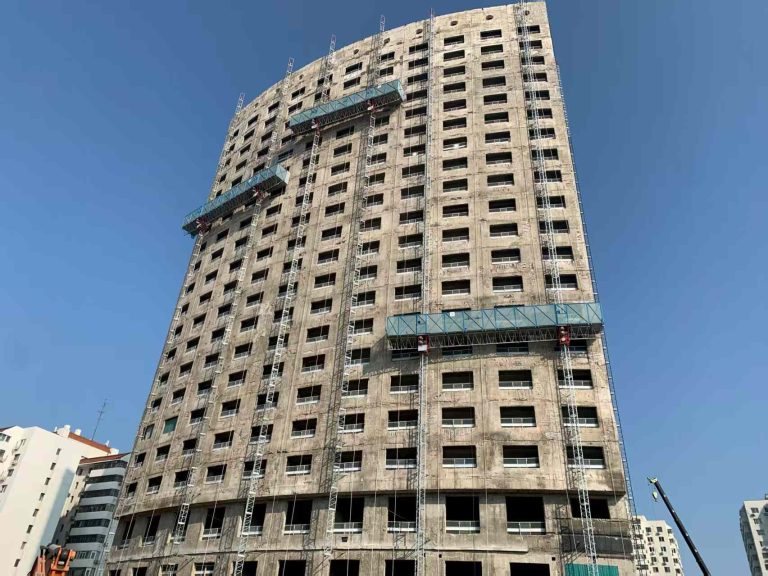
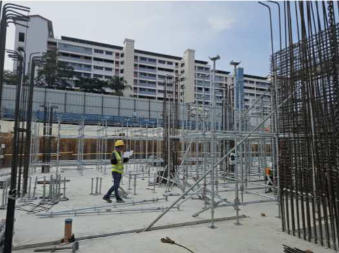
High-rise work requires consistent component control. Small assembly errors can become more serious as working height increases. At the Pasir Ris apartment project in Singapore, modular ringlock scaffolding supported high-rise construction access under demanding site conditions.
Standardised components also make inspections easier. Supervisors can follow a repeatable checklist instead of evaluating improvised connections at each work area.
How Do Inspection and Maintenance Keep Scaffold Towers Reliable?
Inspect Before Use and After Changes
Check vertical members, frames, braces, platforms, locks, guardrails, toe boards, adjustable bases, castors, and welds before use. An additional inspection is required after relocation, alteration, impact, severe weather, or extended inactivity.
Inspection records can help identify recurring damage patterns. For example, repeated deformation in the same component may indicate incorrect handling, excessive loading, or unsuitable storage practices.
Protect Components Between Projects
Concrete, mud, paint, and debris should be removed before storage. Connection points must remain clean. This allows pins, wedges, and locking devices to engage correctly during the next assembly.
Damaged components should be clearly separated from usable stock. Organising parts by system also prevents incompatible components from being mixed. This can compromise both fit and structural performance.
FAQ
Q: How high can a scaffold tower safely be used?
A: The safe height of a scaffold tower depends on its base dimensions, stabilisers, platform load, wind exposure, manufacturer instructions, and local regulations. Boxes, ladders, or improvised supports should never be placed on the platform to increase working height.
Q: Can a mobile scaffold tower be moved while occupied?
A: No. Workers, tools, materials, and loose objects should be removed before moving a mobile scaffold tower. After repositioning, the wheels must be locked and the complete tower inspected again.
Q: What is the delivery time for a scaffold tower order?
A: Scaffold tower delivery time depends on order quantity, tower configuration, custom engineering, surface treatment, packaging, and destination. At GOWE, we confirm the production and shipment schedule after drawings, the bill of materials, technical requirements, and delivery terms have been approved.