
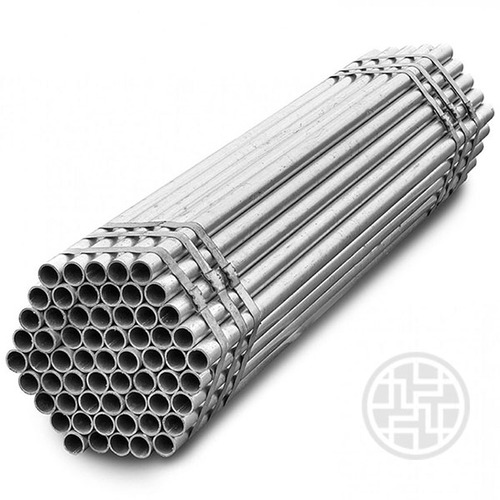
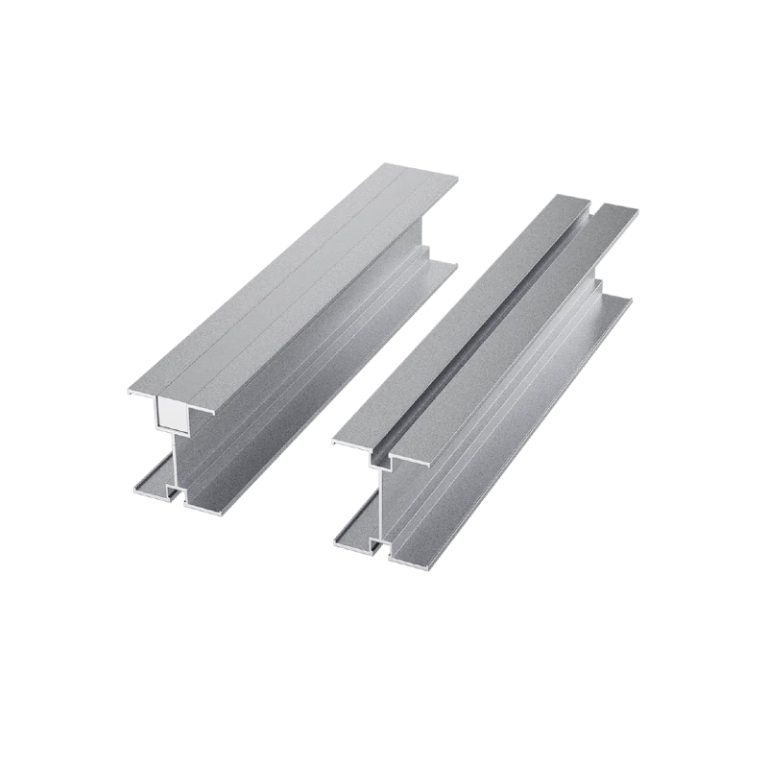
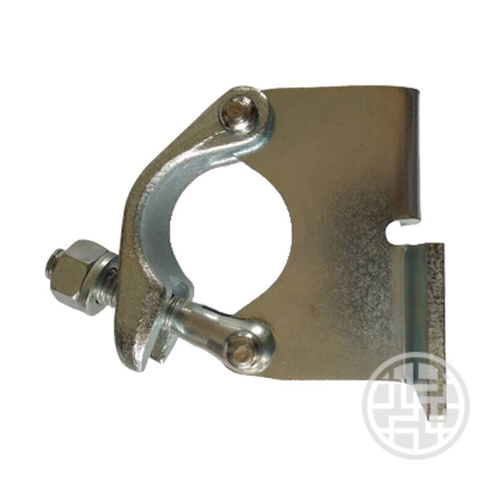
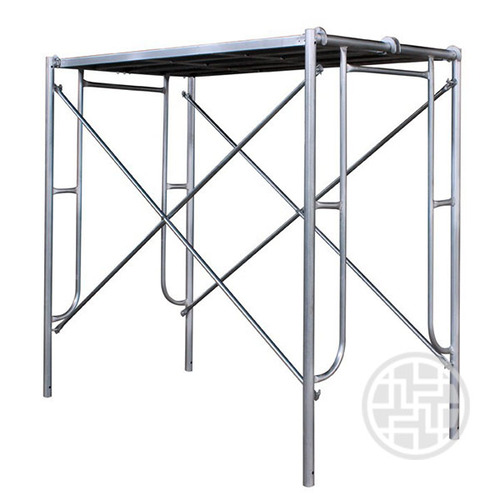
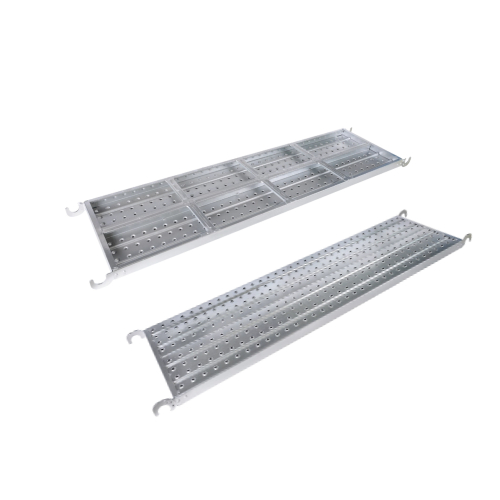
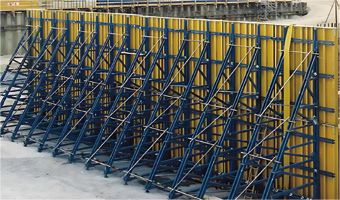
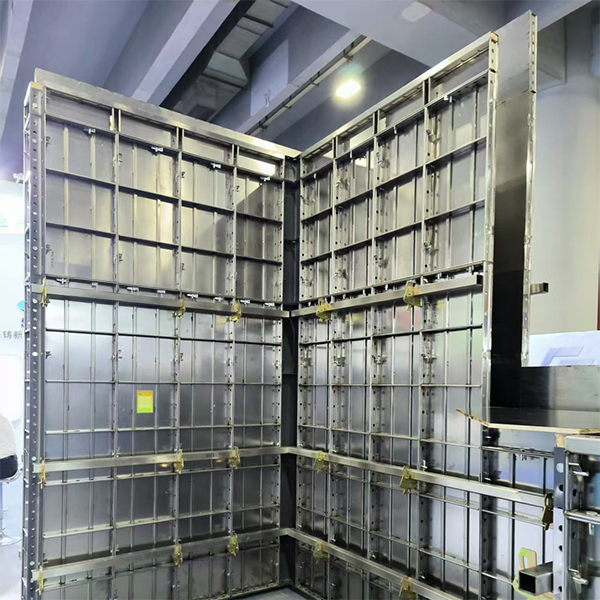




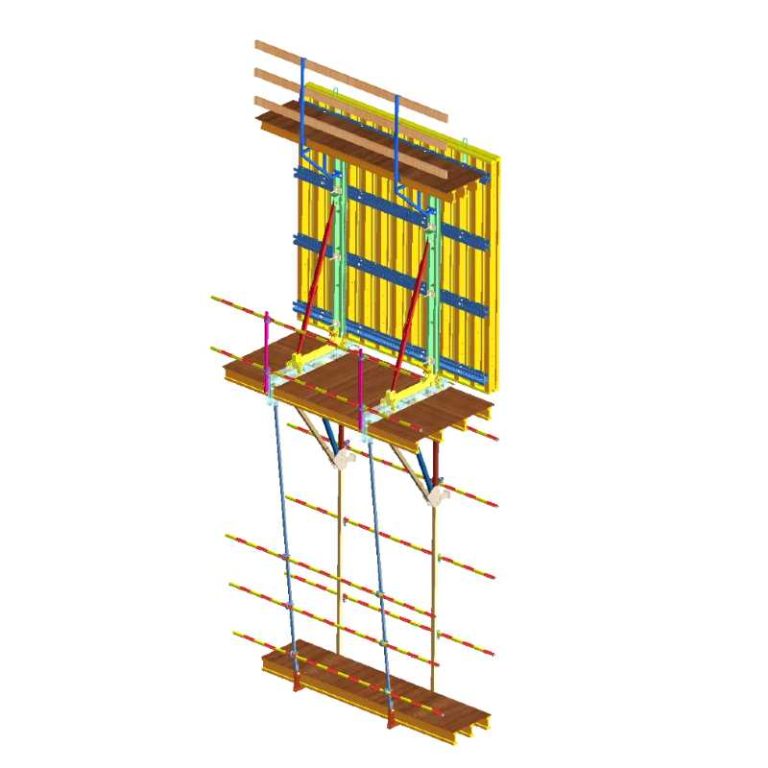
Toeboard scaffolding helps stop tools, small materials and debris from leaving an elevated work platform and striking people below. Effective protection starts before the board is fixed: the platform load, access route, stored materials and work sequence all affect whether falling-object exposure is controlled.
Where Do Falling-Object Risks Begin Around Scaffold Platforms?
Identify Tools and Materials Stored Close to Platform Edges
Falling-object risk often begins when hand tools, fittings, offcuts, fasteners or temporary equipment are placed near an open platform edge. Load planning should reflect the maximum intended work condition, including people, tools, materials and temporary equipment, rather than treating the platform as a people-only surface.
Ask what could roll, slide, be kicked, be pulled by a hose or lifted by wind. If a new work phase adds storage, the platform condition has changed and should be reviewed.
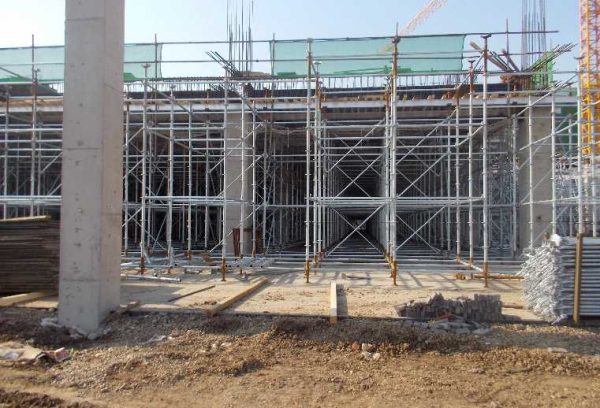
Check Platform Openings, Corners and Areas Above Other Workers
Edges are not the only exposure point. Platform openings, inside corners, access breaks and material transfer points can create short drop paths. In U.S. OSHA scaffold rules, when tools, materials or equipment may fall from a scaffold and strike employees below, controls may include barricading the lower area or using edge and overhead protection.
Checks should look outward and downward, especially above entrances, loading points, pedestrian routes and other trades. Related scaffold load capacity guidance can help connect stored materials with the planned platform condition.
Consider How Work Activities Change Falling-Object Exposure
The same scaffold can change risk level as work moves from access to installation, repair or dismantling. Review changed methods and temporary storage before use, especially when drills, buckets, boards or dismantled parts are introduced.
Access planning should cover entry, movement, material delivery and separation from worker routes. Access, guardrails, toeboards and falling-object controls must suit the approved arrangement.
How Should Toeboard Scaffolding Protect the Platform Edge?
Maintain Continuous Edge Protection Around Working Areas
Toeboard scaffolding should form continuous low-level protection along working edges where small objects could slide or be kicked off the deck. Under OSHA’s U.S. criteria, scaffold toeboards used for falling-object protection must be at least 3.5 inches high, securely fastened at the outermost platform edge, have no more than 0.25 inch clearance above the surface and be solid or have openings no greater than 1 inch.
These criteria are not a universal GOWE product specification, but they show the performance logic a plan should address: height, fastening, edge location, clearance and opening size. GOWE works across formwork and scaffolding systems through integrated research and development, production, sales, leasing, construction and operation, so our scaffold discussions treat edge protection as part of platform arrangement.
Coordinate Toeboards With Platform Openings and Access Points
Continuous protection still needs planned breaks. Ladders, stair towers, hoist landings, loading bays and material gates must remain usable without uncontrolled gaps. Define where a board stops, where a removable section begins and who may change it.
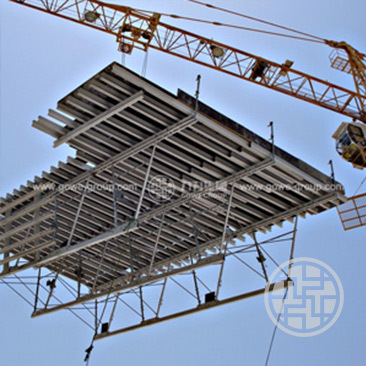
For edge-heavy work areas, a full-perimeter system such as the GOWE protection platform may be relevant when broader building-edge protection is needed. The choice should follow the work method, lower-level exposure and approved configuration.
Avoid Gaps Created by Temporary Platform Changes
Temporary changes are a weak point. A toeboard may be removed to pass material, open a corner or adjust planks. If it is not reinstalled, the platform can look protected while leaving a direct drop path.
When a scaffold is raised, extended or altered, review ties, braces, connections, load condition, access and exposure under applicable design and competent-person control. Height, facade shape, openings, setbacks and wind exposure can change the controls required.
When Is Toeboard Scaffolding Not Enough on Its Own?
Control Small Tools and Loose Materials That Can Pass Over or Through Edge Protection
A toeboard can reduce sliding and kicking hazards, but small tools and loose materials still need direct control. Tape measures, bolts, sockets, discs and wire offcuts may pass over a board or through a gap.
OSHA’s framework treats toeboards as one measure alongside screens, guardrail systems, debris nets, catch platforms and canopies. Tool lanyards, closed containers, debris trays and housekeeping may also be needed.
Manage Material Stacking Instead of Relying on the Toeboard as a Barrier
Material height is separate. If tools, materials or equipment are piled higher than the toeboard, paneling or screening up to the guardrail may be needed to protect employees below. Large or heavy objects that cannot be contained should be placed away from the edge and secured.
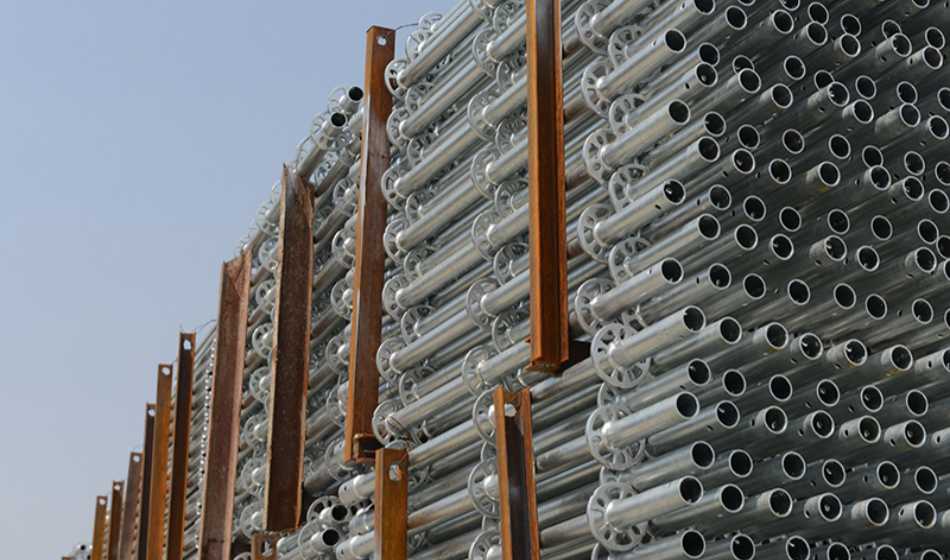
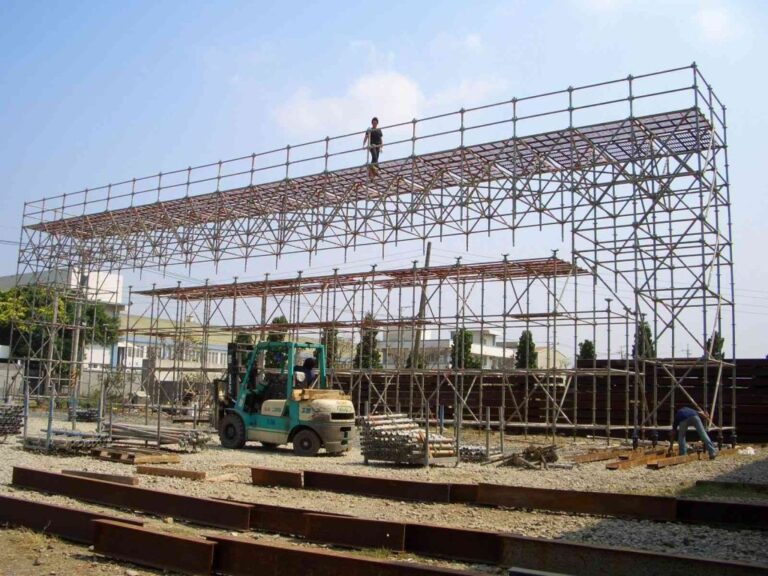
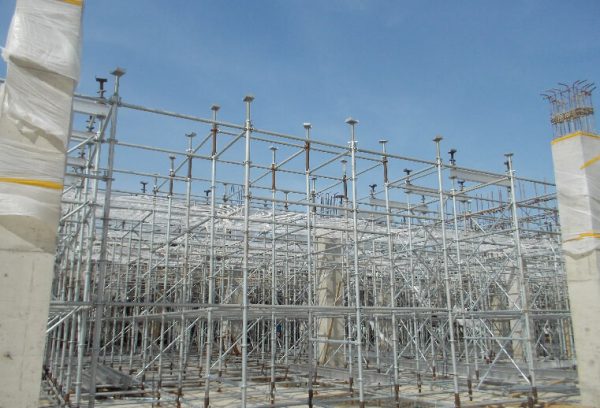
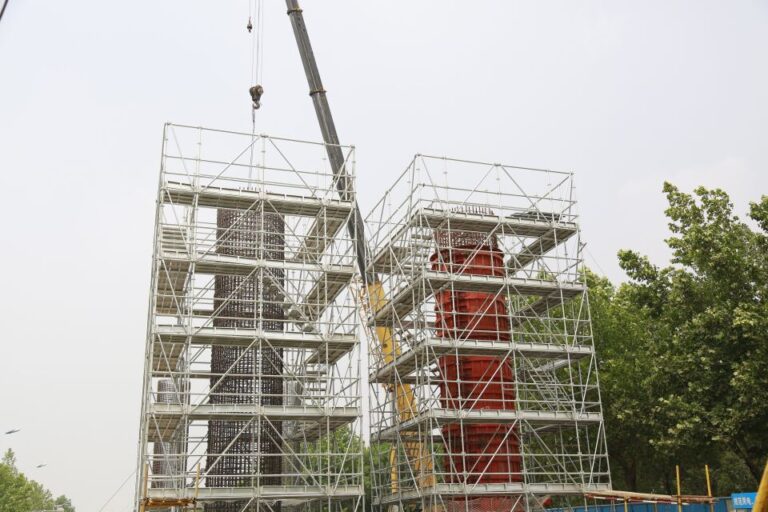
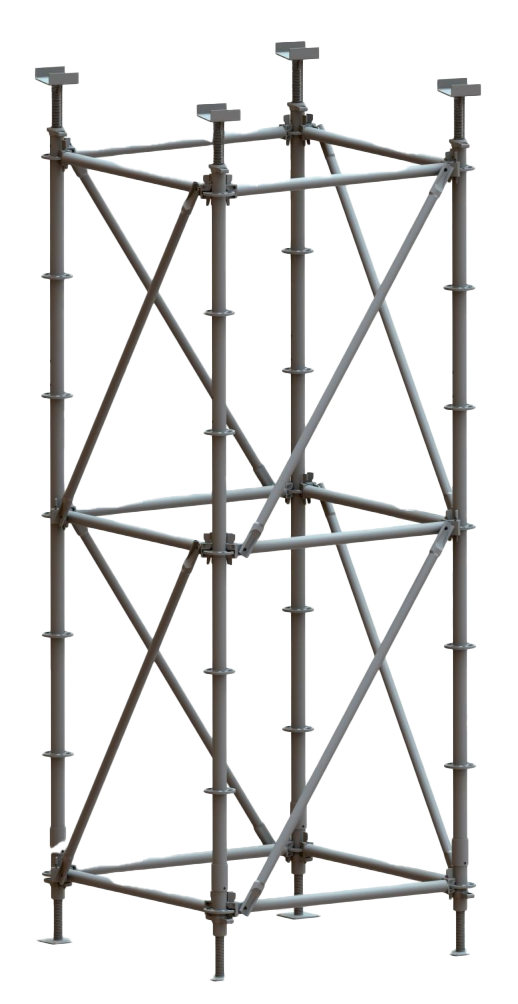
This matters when materials are staged for erection or alteration. GOWE’s M48 and M60 ringlock scaffolding systems include standards, ledgers, diagonal braces, base jacks, base collars and head jacks. In a GOWE ringlock scaffolding arrangement, wedge-pin connections transmit load and horizontal force through connected parts.
Use Work-Zone Controls Where People Must Pass Below Scaffold Operations
Where people must pass near scaffold operations, support toeboard scaffolding with ground-level controls such as barricades, exclusion zones, covered walkways, spotters, phased work or overhead protection.
The control should match the exposure. A short task above a closed area may need barricading and tool control; repeated work above an active route may need a formal overhead protection plan.
How Should Toeboards Be Checked During Scaffold Use?
Check Fixings, Damage and Displacement Before Work Begins
Before work starts, the toeboard check should confirm that each board is present, fixed, aligned at the edge and not damaged, displaced or bridged by loose debris. HSE guidance for tower scaffolds identifies guardrails, toeboards, bracing and proper access as required system components and warns against leaving required parts out.
Also look for clearance under the board, missing clips, bent sections, split timber, loose couplers and boards hidden behind materials. Stop work and correct faults when the condition is unsafe.
Recheck Edge Protection After Platform or Access Changes
One morning inspection is not enough when the platform changes. A usable handover should identify what was inspected, the work condition covered, defects corrected and when use may resume.
After a loading bay, stair access or platform boards change, check the toeboard line again. Records should follow work-phase changes rather than one initial acceptance.
Confirm Replacement Components Match the Approved Scaffold Configuration
Replacement parts should match the approved scaffold configuration. HSE notes that tower stability depends on firm, level ground, correctly supported and locked castors or base plates, and stabilisers or outriggers when required by instructions; it also warns that missing, broken or incompatible components create unsafe conditions.
The same applies to toeboards and fixings. A board that is too short, poorly secured or incompatible can create a hidden failure point. After replacement, confirm that edge protection remains continuous, secure and suited to the current work.
FAQ
Q: What Is Toeboard Scaffolding Used for on Construction Sites?
A: Toeboard scaffolding is used to help stop hand tools, small materials, debris and loose objects from leaving scaffold platforms and striking people or work areas below.
Q: How Does Toeboard Scaffolding Help Prevent Falling Objects?
A: It forms low-level edge protection at the platform perimeter, reducing the chance that objects are kicked, rolled or slid off the working surface during normal scaffold use.
Q: Does Toeboard Scaffolding Need to Cover Every Platform Edge?
A: It should protect exposed working edges where falling objects could create risk below, but the exact layout depends on the scaffold configuration, access points, work activity and applicable rules.
Q: When Should Toeboard Scaffolding Be Inspected?
A: It should be checked before work begins and rechecked after assembly, alteration, platform changes, access changes or any event that may affect the scaffold’s safe condition.
Q: Can Toeboard Scaffolding Replace Other Falling-Object Controls?
A: No. Toeboards are one control. Small loose items, stacked materials, heavy objects and exposed work zones may also need screens, secured storage, tool control, barricades or overhead protection.